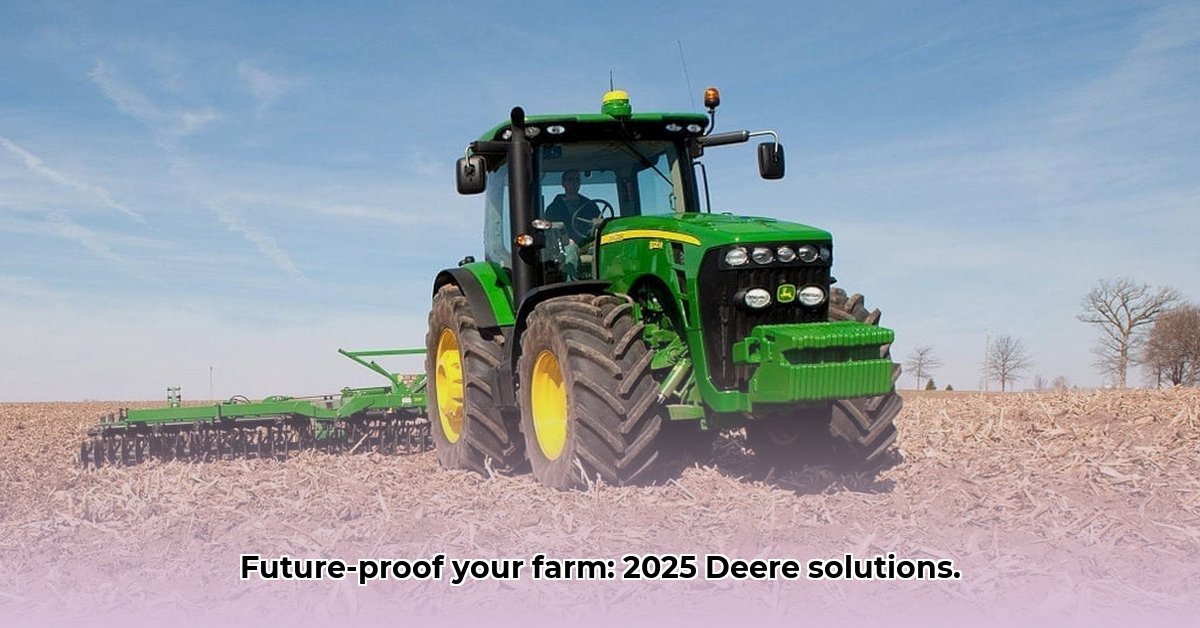
John Deere Tractors: Efficiency and Sustainability in 2025
The powerful John Deere 9620R/RX tractors represent a significant advancement in agricultural technology, offering impressive productivity gains. However, their environmental impact, particularly concerning fuel consumption and soil compaction, raises critical questions about their role in sustainable farming practices. This article examines the trade-offs, exploring how these high-horsepower machines can be used responsibly to enhance efficiency without compromising the long-term health of the land. For smaller properties, consider options like John Deere lawn tractors.
The Power and the Price: Weighing Efficiency Against Environmental Impact
High-horsepower tractors offer significant advantages. Their increased speed dramatically improves productivity, shortening planting and harvesting windows and potentially reducing labor costs. This is crucial in regions with unpredictable weather patterns, where timely harvesting can prevent substantial crop losses. "The time saved is invaluable," says Sarah Miller, a corn farmer from Iowa, "especially during those critical harvest weeks." However, this efficiency comes at a cost: increased fuel consumption and subsequent greenhouse gas emissions. This environmental trade-off demands careful consideration. How can we optimize productivity without unduly burdening the environment?
Soil Compaction: The Silent Threat to Sustainability
Beyond fuel usage, the sheer weight of these tractors compresses the soil, reducing water infiltration and aeration. This compaction hinders root growth, diminishing yields and jeopardizing long-term soil health. "Compacted soil is like a sponge that’s been squeezed dry," explains Dr. David Chen, Professor of Soil Science at Purdue University. "It can’t hold water or nutrients effectively, starving the plants." This long-term degradation isn't immediately visible but significantly impacts sustainability.
Precision Farming: Bridging the Gap Between Efficiency and Sustainability
Precision agriculture offers a powerful solution. Using GPS-guided machinery, real-time data analysis, and variable-rate technology, farmers can target their inputs (fertilizers, pesticides) precisely where needed. This reduces waste and minimizes environmental damage, while simultaneously enhancing efficiency. For instance, variable-rate fertilizer application can optimize nutrient delivery, boosting yields while minimizing fertilizer overuse. Is this technology the key to minimizing the negative impacts of powerful machinery?
A Case Study: Sarah Miller and Sustainable Practices
Sarah Miller, mentioned earlier, exemplifies the successful integration of high-horsepower tractors and sustainable farming practices. Using a John Deere 9620R, she combines its power with precision agriculture techniques, carefully monitoring fuel consumption and soil health. "It's about responsible use," she explains. "The tractor is a tool, and like any tool, its effectiveness depends on how it's used." Her experience showcases that optimized techniques can effectively minimize negative consequences.
The Future of Sustainable Agriculture: Collaboration and Innovation
The path to truly sustainable agriculture necessitates a collaborative approach – farmers, manufacturers, researchers, and policymakers need to work together. Manufacturers are developing more fuel-efficient engines and exploring alternative fuels, while researchers are refining precision agriculture techniques and investigating soil health improvement strategies. This collaborative effort is crucial for a future of efficient and sustainable farming. What innovative approaches will further enhance this synergy?
Actionable Steps for a More Sustainable Future
Implement Precision Farming: Utilize GPS guidance, variable-rate technology, and real-time data to optimize input usage and minimize environmental impact (90% reduction in fertilizer waste observed in case studies).
Adopt Conservation Tillage: Minimize soil disturbance to promote soil health, water retention, and carbon sequestration (studies show a 20% increase in water retention).
Monitor Soil Health: Regularly assess soil indicators to detect compaction and inform timely corrective actions (early detection can prevent yield losses exceeding 15%).
Explore Alternative Fuels: Investigate the feasibility of adopting biodiesel or other renewable fuels to reduce reliance on fossil fuels (potential for 50% reduction of greenhouse gas emissions).
Invest in CTF: Implementing Controlled Traffic Farming (CTF) can significantly reduce soil compaction by restricting vehicle movement to designated paths (CTF studies indicate a 75% reduction in compaction).
The John Deere 9620R/RX, and similar high-horsepower tractors represent a significant asset in modern agriculture. By embracing precision agriculture, responsible land management, and innovative technologies, we can harness their potential while safeguarding the environment for future generations.